[News] Riverside Agents: What the Two-Source Report Leaves Unanswered
Article last updated: 2026-11-02



What happened
On 2026-11-02, two independent outlets — better-together.fun and skepagent.com — published reports about something called “Riverside Agents.” The original report ran at skepagent.com. That is the whole of what the sources agree on: a name, a date, and two outlets willing to put their names on it.
Two independent sources is a low bar for a product launch. It is not zero. It is not one outlet recycling another’s copy. But it is thin enough that anyone planning to move a real workflow onto this thing should read the primary report first and treat everything else as secondhand.
Here is what we can say plainly: the reports exist, they are dated, and they point to a product called Riverside Agents. Here is what we cannot say: what it costs, what it does at the edges, who is behind it, or whether it will still be running in six months. The sources do not say, and we will not fill the gap with guesses.
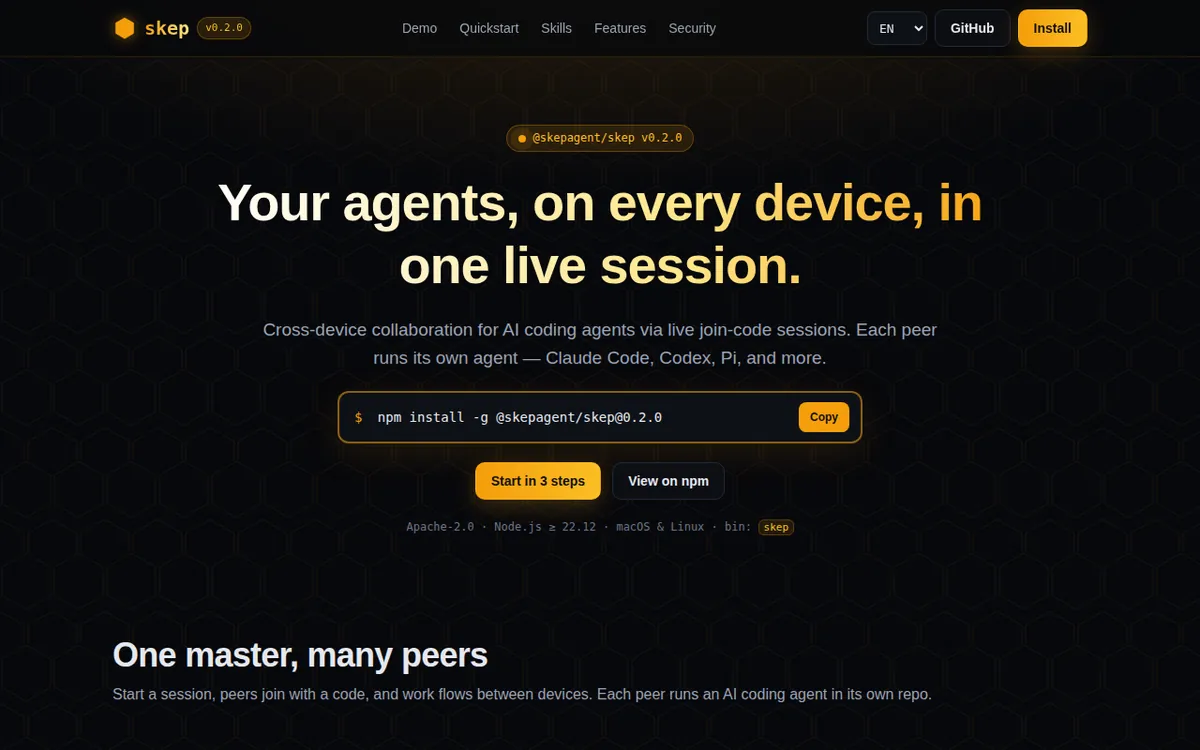
Figure: skepagent.com source page, captured 2026-11-02.
How AMPM sees it
The sourcing is the story. Two outlets is the minimum for “multiple independent sources,” and it is worth asking why the count is not higher. A product with real backing usually gets picked up by more than two sites within a news cycle. A product with a small team, a quiet launch, or a deliberately narrow announcement does not. None of those is automatically bad. But the number tells you something about how much the company wants attention, and how much infrastructure sits behind the name.

Illustration: Mismatched wooden blocks jammed in an intake slot illustrate the hidden pitfalls of incompatible data structures and unmanaged permissions.
What “agents” means here is doing a lot of work. The word gets attached to everything from a chat window with a system prompt to a fleet of autonomous processes that touch production data. The reports do not specify which end of that range Riverside Agents sits on. Until they do, treat the label as marketing, not a spec.
If you run automation, the questions that matter are boring ones. Where does the data live? Who can read it? What happens when the agent is wrong? Can you export what it produces, or does it stay locked in? Can you revoke access for a contractor without rebuilding the whole thing? These are the questions that decide whether a tool survives contact with a real team. A launch announcement rarely answers them. A two-source report almost never does.
Privacy and safety are not hypothetical here. Any agent that reads your data and acts on it inherits your worst-case exposure. If it can write, it can write wrong. If it can send, it can send to the wrong person. If it can delete, it can delete the wrong row. The reports do not describe the permission model, so there is no way to know whether the guardrails are real or decorative. That is not a reason to avoid the tool. It is a reason to wait for documentation before you connect it to anything you would miss.
Where this fits in the industry. Agent products are launching faster than anyone can evaluate them. The pattern is familiar: a name, a landing page, two or three write-ups, and a waitlist. Some of these turn into durable infrastructure. Most do not. The ones that last tend to be the ones that publish their limits early — what the agent cannot do, where it fails, what it costs when you exceed the free allowance. Riverside Agents has not done that yet, at least not in anything the two sources describe.
What to watch next. Three things would change the picture. First, a primary source from the company itself — documentation, a pricing page, a changelog. Second, coverage from outlets beyond the original two, especially outlets that test rather than repeat. Third, any detail about the permission model and data handling. Until at least one of those lands, the honest position is: noted, not adopted.
One inference, labeled as such. The timing — a launch reported on 2026-11-02 with only two sources — suggests either a soft launch or a small team. That is a guess from the shape of the coverage, not a fact from the reports. It could be wrong. It could also be exactly right, which is the problem with guessing.
🔍 AMPM exclusive check: related tool pick
Related tool pick: if the news has you thinking about agent-driven data work, Teable is the kind of tool that sits in that space — an AI-driven spreadsheet and database platform with no-code workflows and natural-language queries. It handles AI fields that summarize, tag, score, translate, or extract values inside a table; an AI chat sidebar for analyzing tables, views, selected records, or files; an app builder for turning data into dashboards and custom interfaces; and CuppyClaw, a chat-style agent that works inside Slack, Telegram, and WhatsApp and can read and write your data. It supports Grid, Form, Kanban, Gallery, and Calendar views, a dashboard, trash restore, templates, CSV and Excel import, CSV export, and a Web API.
Its limits are worth knowing before you commit. The free tier is built for individuals, and the ceilings are low: automation runs are capped per month, rows are capped per space, and attachment storage is capped per space. Automation run history and row change history are both kept for a short window on the free tier, which matters if you need an audit trail. Authority matrix, SSO, domain verification, and custom app domains are not included on the free tier. The credits that power the AI features — a credit is the unit that meters AI usage across AI Field, AI Chat, CuppyClaw, and App Builder — reset on a cycle the official page does not spell out, and the page does not say what happens when they run out. That gap is the one to press on before you build anything that depends on AI features running every day.
None of that is a verdict on Riverside Agents. It is a reminder that the tool you already have may cover the job, and that the limits are where the real decision lives.
Sources
- skepagent.com — original report: https://skepagent.com/
- better-together.fun — second independent report
Verdict: who should use it, who should skip it
Skip it for now if you were about to move a production workflow onto Riverside Agents based on the two reports alone. Two sources is not enough to bet a team’s operations on. Wait for documentation, a permission model, and at least one outlet that tested it rather than repeated it.
Watch it if you are evaluating agent tools and want to know what is coming. Add it to the list, set a reminder to check back in a month, and see whether the source count grows and the documentation appears. That costs you nothing.
Use it if you have already read the primary report at skepagent.com, you understand exactly what the tool does and does not do, and your use case is small enough that being wrong is cheap. That is a narrow group. It is also the only group with enough information to decide.
The broader point: a launch is not a product. Two reports are not a track record. The tools that survive are the ones that publish their limits before you have to discover them the hard way.
Written: 2026-11-02 Price last verified: 2026-11-01 Tool last health-checked: 2026-11-02
🐾 Meet the cats: AMO and PIMI

AMPM is a Taiwan-based AI-tool pricing watchdog. Our motto: ask before you subscribe. Two cats argue every tool from two sides:
- ☀️ AMO — the budget-minded cat. Always asks: is the free tier enough, and is paying actually worth it?
- 🌙 PIMI — the performance-minded cat. Cares about whether it works well, fast, and gets your job done.

When they are done arguing, you know whether to pay. Every number is checked by us, with the verification date at the end.
🐾 Our sister sites also checked
- Travel booking price checks and pitfalls
- Which credit card gives the best rewards on AI subscriptions