[Trends] DeepSeek Pricing Drops Again: What September's AI Tool Price-Change Records Reveal
- Free tier: Yes
- Cheapest paid plan: US$0/mo and up
- Free quota: The web version is basically free, but has peak traffic limits.
- Last checked: 2026-10-11
Article last updated: 2026-10-04


AMPM tracks confirmed price changes across the AI tool market — not rumors, not “we think this changed,” but records with an official source link attached. Between August and September 2026, our logs show 22 confirmed pricing moves across 16 tools. DeepSeek, the Chinese chatbot famous for its nearly-free API, shows up twice in that list — once going up, once coming back down. Both moves are a useful lens for how fast AI pricing is changing right now, and why checking the official pricing page yourself still beats trusting a headline.
September by the numbers: 22 changes, 16 tools
Here’s the breakdown AMPM’s records produced for August–September 2026: 2 price increases, 6 price cuts, 3 cases of a free tier getting smaller or cut entirely, 1 case of a free tier getting bigger, 7 new paid plans added, and 3 plans removed from pricing pages outright. That’s 22 confirmed, sourced changes touching 16 different tools in about six weeks.
The split tells its own story: price cuts (6) outnumber price hikes (2) three to one, but “new plan added” (7) is the single biggest category. Vendors aren’t mostly repricing what they already sell — they’re restructuring, splitting old plans into new tiers, or bolting on usage-based add-ons next to subscriptions. DeepSeek did both in the same six-week window.
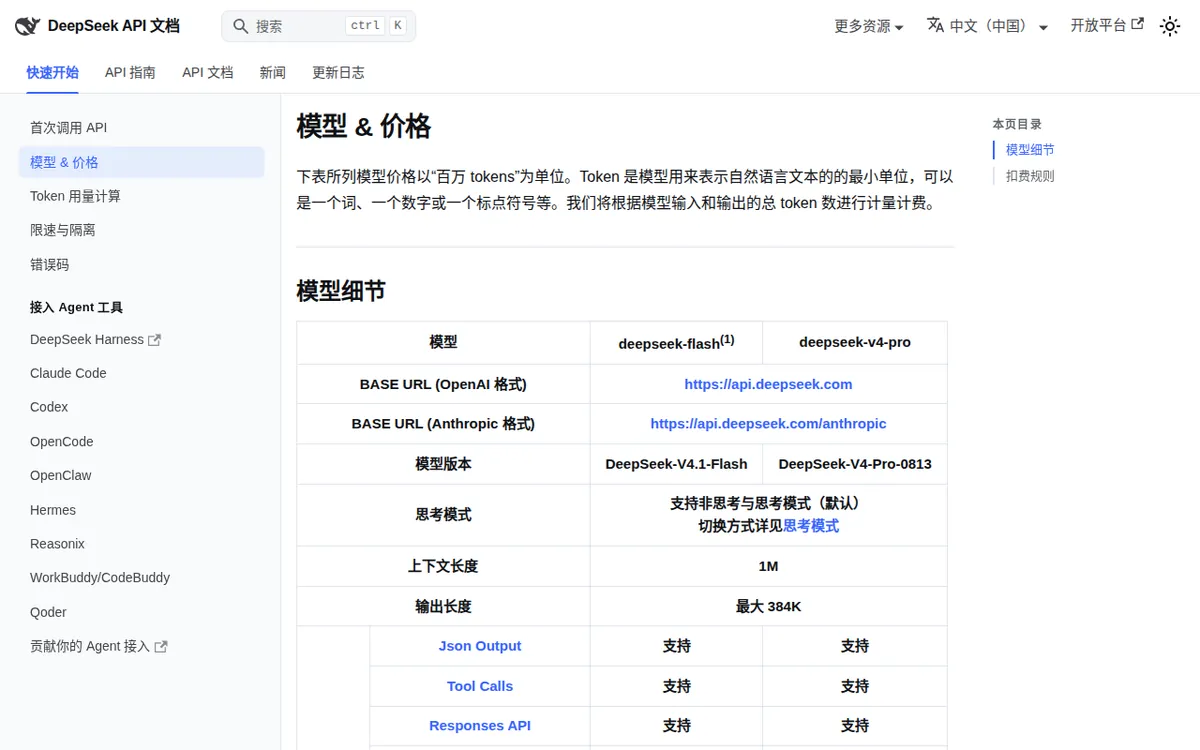
Figure: api-docs.deepseek.com official pricing page, captured 2026-10-04.
DeepSeek’s two moves in six weeks
On August 22, 2026, DeepSeek’s API got more expensive. The V4-Flash model’s off-peak output price moved from US$0.28 to US$0.66 per million tokens (a unit of text roughly equal to three-quarters of a word) — a jump of 2.4 times. During peak hours, that same output price rose to US$1.32 per million tokens, 4.7 times the old rate. The same day, DeepSeek also added a new model to its lineup: deepseek-v4-pro.
Then, on September 25, 2026, DeepSeek reversed course — partly. The old V4-Flash pricing (off-peak: US$0.007 per million tokens for cached input, US$0.22 for uncached input, US$0.66 for output) was replaced by a new model, V4.1-Flash, at lower off-peak rates: US$0.003 for cached input, US$0.15 for uncached input, US$0.60 for output. Peak-hour pricing stays at double the off-peak rate. Per million tokens, that’s output down by US$0.06, uncached input down by US$0.07, and cached input down by US$0.004 compared to the September 4 reading — smaller than the August hike, but a real cut.
The current lineup, verified September 25, 2026 directly against api-docs.deepseek.com: V4.1-Flash (called via the API name deepseek-flash) charges US$0.003/US$0.006 (off-peak/peak) per million tokens for cached-hit input, US$0.15/US$0.30 for uncached input, and US$0.60/US$1.20 for output. The pricier V4-Pro model (version V4-Pro-0813) charges US$0.022/US$0.044 for cached input, US$0.66/US$1.32 for uncached input, and US$1.98/US$3.96 for output — roughly seven times Flash’s rate. V4-Pro also caps concurrent requests at 500, versus 2,500 for Flash. Peak hours run Monday to Friday, 01:00–04:00 and 06:00–10:00 UTC, excluding Chinese public holidays.
Who paid more, who paid less
DeepSeek wasn’t the only mover. Among the 6 confirmed price cuts: Glaze by Raycast’s Pro plan dropped from US$25/month to US$10/month, a 60% cut, while its Team plan went from US$35/seat to free during its beta. Replit’s Core plan fell from US$25/month to US$20/month billed monthly (US$17/month if paid annually). Mistral AI cut its Large model’s API input price from US$2 to US$0.5 per million tokens, a 75% reduction. Buzzabout trimmed its per-mention price (the cost to track one social media mention) from US$0.025 to US$0.02, a 20% cut.
The 2 price increases both favored a different kind of user: Teable’s Pro plan doubled from US$12 to US$24/month billed monthly, and its Business plan rose from US$24 to US$36/month, 1.5 times the old rate.
Free tiers moved in both directions. ChatGPT expanded its free offering — as of September 25, 2026, the official pricing page states that unlimited text chat with GPT-5.6 Luna is now free, though other features (voice, image generation, deep research) still carry limits. On the other side, Glaze cut its one-time signup bonus from 120 points to 50, Sim capped its free 1,000 credits as a one-time grant rather than a monthly refresh, and Pazi’s pricing and homepage no longer list any free plan at all — AMPM’s check found no “free” or “trial” wording anywhere on the site.
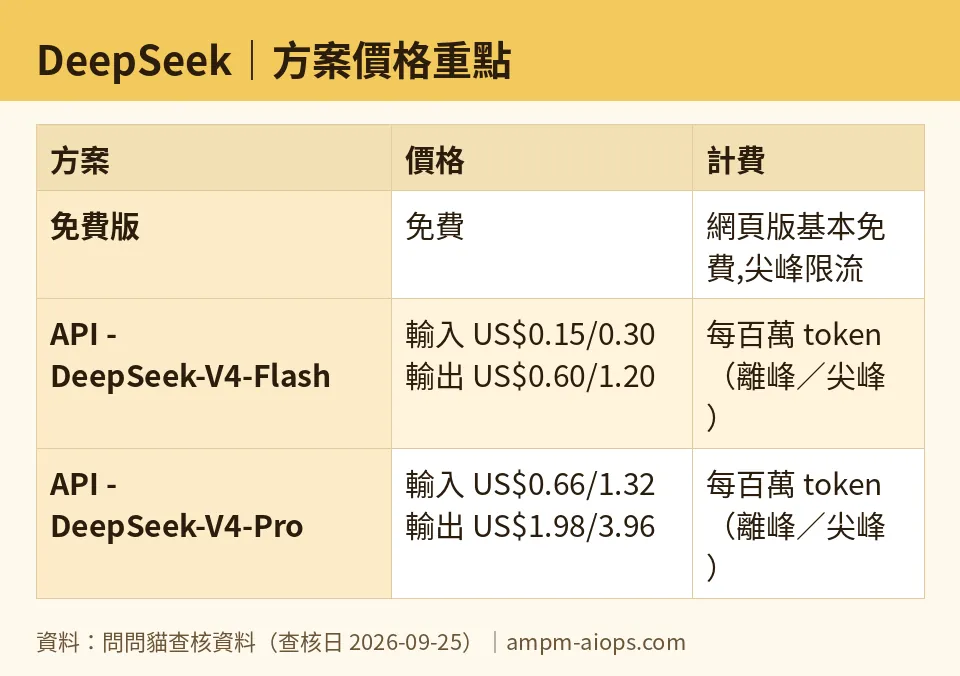
Figure: compiled by AMPM from its verified data (last verified 2026-09-25).
🔍 AMPM exclusive check
DeepSeek’s official pricing pages (English and Chinese versions of api-docs.deepseek.com) show the current V4.1-Flash and V4-Pro numbers cleanly. What they don’t spell out: the old model names — deepseek-v4-flash and deepseek-v4-flash-vision-exp — still work if you call them, but DeepSeek is now quietly serving those requests with V4.1-Flash and billing at V4.1-Flash’s rates. If you’re a developer who hardcoded the old model name into your app, your calls are already running on different infrastructure and pricing without any change on your end. That’s not disclosed as a migration notice on the pricing page itself — AMPM caught it by reading the model documentation alongside the price table, not the price table alone.
We also checked the September price cut twice: once on September 4, 2026 (uncached input US$0.22, output US$0.66, off-peak) and again on September 25, 2026, confirming the lower V4.1-Flash numbers were live on both the English and Chinese documentation pages at the same time. Nothing else differed from the official page this time — the V4-Pro numbers matched the official site exactly on September 25, with no change since the model’s August 22 debut.
☀️ AMO, the budget-minded cat

Twenty-two changes in six weeks, and I’m only impressed by one direction: down. DeepSeek’s web version is still free to use, no signup required even, though it throttles you during peak hours. If you’re just chatting or testing code, that costs nothing — the catch is DeepSeek doesn’t publish a clear daily quota for the free web version, so you’re flying blind on exactly how much you get before throttling kicks in. For the API, the September 25 cut brings V4.1-Flash output down to US$0.60 per million tokens off-peak — cheap enough that a casual side project could run for weeks on a few dollars. But notice the August swing first: the same model line got 2.4 to 4.7 times more expensive before it got cheaper again. If you build on DeepSeek’s API, budget for volatility, not just the current number. V4-Pro, at roughly seven times Flash’s price, is overkill unless you specifically need its extra capability — for most budget users, Flash is the one to use. Across the rest of this month’s list, the real wins for cheapskates are Glaze’s Pro plan (60% off, now US$10/month) and Mistral’s API price cut (75% off input tokens) — both bigger percentage cuts than DeepSeek’s.
🌙 PIMI, the performance-minded cat

Price is only half the story — does the thing actually perform? DeepSeek’s V4-Pro has a hard concurrency ceiling of 500 simultaneous requests, a fifth of Flash’s 2,500. If you’re building something that needs to scale, that cap matters more than the per-token price. The new V4.1-Flash (released September 10, 2026) replaced the older V4-Flash under the hood — same API call, different model — and the pricing data don’t tell you whether output quality changed along with the backend swap; that’s not something a pricing page can verify, and AMPM didn’t test model output quality here. What I do care about: context window. Both models support up to 1 million tokens of context (roughly enough to feed in a lengthy document) with a maximum output of 384,000 tokens, per the API specs — that’s a serious amount of room to work with for the price. Peak-hour throttling on the web version and 2x API pricing during peak windows (weekday mornings in China time) both point to the same reality: DeepSeek’s infrastructure gets squeezed during Chinese business hours, so if your use case needs consistent latency around the clock, test it at different times before committing. For teams evaluating alternatives this month, Mistral’s API cut (Large model input down to US$0.5/million tokens) and Replit’s Core plan (now US$20/month monthly) are worth a side-by-side look if raw throughput, not just price, is the deciding factor.
Verdict: who should use it, who should skip it
If you want a near-free chatbot for everyday use, DeepSeek’s web version still delivers at no cost — just expect slower responses during China business hours. If you’re building on the API and cost-sensitive, V4.1-Flash’s September 25 price cut makes it one of the cheapest capable models available, but build in a buffer for the kind of price swings DeepSeek showed in August. Skip V4-Pro unless you’ve confirmed you need it over Flash — the price gap (roughly 7x) and concurrency cap (500 vs. 2,500) are both steep for most use cases. Zooming out to the whole September list: this was a month where restructuring (7 new plans, 3 removed) outpaced simple repricing — worth remembering before you assume your current plan on any tool will look the same next month.
Written: 2026-10-04 Price last verified: 2026-09-25 Tool last health-checked: 2026-10-04
🔗 Related on AMPM
📎 Sources
All prices and quotas in this article come from AMPM’s verified dataset for DeepSeek (last verified 2026-09-25); primary sources:
🐾 Meet the cats: AMO and PIMI

AMPM is an independent AI-tool pricing watchdog tracking official prices worldwide. Our motto: ask before you subscribe. Two cats argue every tool from two sides:
- ☀️ AMO — the budget-minded cat. Always asks: is the free tier enough, and is paying actually worth it?
- 🌙 PIMI — the performance-minded cat. Cares about whether it works well, fast, and gets your job done.

When they are done arguing, you know whether to pay. Every number is checked by us, with the verification date at the end.
🐾 Our sister sites also checked
Read next
- DeepSeek Full breakdown: pricing, features and real-world limits
- DeepSeek Is the free quota enough?
- DeepSeek Alternatives
- Free plan limits for every AI tool we track
More verified articles on this tool
- [Use cases] DeepSeek Pricing: When the Free Web Chat Is Enough, and When the API Pays Off
- [Special] DeepSeek Pricing: The Web App Is Free, the API Isn't, and the Peak-Hour Catch
- [Pitfalls] DeepSeek Free Tier Limits and API Pricing: The Peak-Hour and Old-Model Billing Traps