[News] Fireflies.ai and the Dartmouth Provost Story: What Should You Ask Before a Bot Joins Your Meeting?
- Free tier: Yes
- Cheapest paid plan: US$18/mo and up
- Free quota: On the official pricing page for the free tier, the Free column reads: …
- Last checked: 2026-11-02
Article last updated: 2026-11-01


Our angle is narrow. A story about a university provost losing a job over AI use is circulating, and our tracker linked it to Fireflies.ai. We could not confirm from our data how, or whether, the tool figured in it. So this piece does two things. It says plainly what we know and don’t. Then it uses the story to ask what anyone should settle before an AI notetaker joins a meeting.
What happened
Two independent outlets are running the story: Ars Technica and a personal blog by Nolan Lawson. Ars Technica’s headline reads: “Dartmouth’s provost warned us about AI cheating—but his own AI use cost him his job.”
That is the extent of what our data holds. We have the headline, the link to the original report, and the fact that two separate sources cover it. We do not have the article text. So we are not going to tell you what the provost did, which AI tool was involved, what policy was broken, or who made the decision. Anything we wrote on those points would be invented.
Two things follow from the headline alone:
- The person in question had publicly cautioned others about AI misuse. The headline frames the outcome as ironic for that reason.
- The consequence was losing a job, not an apology or a policy memo.
Fireflies.ai is a tool that joins video meetings as an automatic participant, records them, and produces a written transcript and summary. It is tagged to this story in our system. The headline we have does not name it. If the original reporting does name Fireflies, read it there and weigh it yourself. We are not asserting a link.
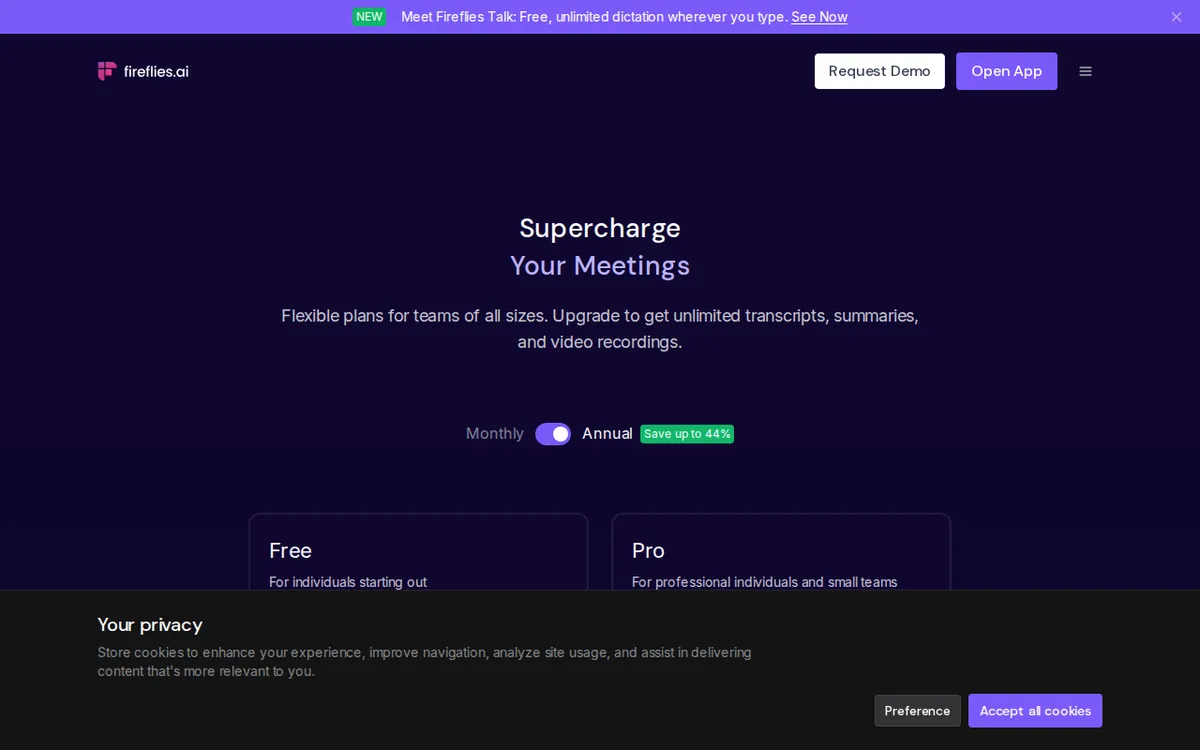
Figure: fireflies.ai official pricing page, captured 2026-11-01.
How AMPM sees it
Everything in this section is our reading, not reporting. Where we infer, we say so.

Illustration: Preaching caution from the podium while secretly relying on automated shortcuts leads to an empty chair exposed in the spotlight.
Why a meeting-notes tool gets tagged to a story like this
An AI notetaker is a different kind of AI tool from a chatbot. With a chatbot, you choose what to paste in. A notetaker listens to everything said in a meeting, including what nobody planned to share. It produces a permanent record: a transcript (the word-for-word text) and a summary (the model’s shortened version).
That changes the risk in three ways.
- Other people’s words end up in your tool. In a meeting, you are not the only voice recorded. Colleagues, students, clients or job candidates may be speaking. They may not have agreed to a third-party service holding their words.
- The summary is the AI’s version, not the meeting’s. Summaries can drop a caveat, flip a decision, or attach a remark to the wrong person. The more a summary gets forwarded as “what we agreed,” the more a small error matters.
- The record outlives the meeting. A transcript can be searched, shared and requested later. A hallway conversation cannot.
Inference: stories where someone’s own AI use costs them their position tend to turn on a gap between what a person says about AI and what they do with it. We don’t know that this is the shape of the Dartmouth case. It is the pattern that makes such stories travel.
Who is affected
If you use a meeting bot, the people with the most to think about are not casual users recording a team stand-up. They are people who hold meetings where the content is sensitive or where they have authority over others:
- Managers running performance or hiring conversations.
- Academics and administrators, where student or personnel matters come up.
- Anyone in legal, medical, HR or finance work, where a recording may trigger confidentiality duties.
- Freelancers who record client calls under an NDA, a confidentiality agreement.
Rules differ by country and by employer. We are not giving legal advice, and we have not checked any jurisdiction’s recording law for this piece. Check yours.
Five questions to settle before a bot joins
These are our checklist, not a claim about any incident.
- Did everyone in the meeting agree? Announce it at the start. A bot appearing in the participant list is not the same as consent.
- Does your employer or institution allow it? Many organizations have an approved-tools list. A personal account on an unapproved tool is the kind of thing that turns a small mistake into a conduct issue.
- Where does the data go, and who can see it? Read the vendor’s privacy and data-retention pages. Find out whether transcripts are used to train models, and whether you can delete them.
- Who reads the summary before it is acted on? Treat it as a draft. Check names, dates and decisions against what you remember.
- Would you be comfortable if this transcript were read aloud later? If not, consider turning the bot off for that meeting.
Where this fits in the industry
Inference: AI notetakers are moving from “nice productivity add-on” to “something workplaces need a policy for.” Vendors tend to market on convenience. Policy teams tend to ask about consent, retention and access. Those two conversations are still catching up with each other.
Another reading is that this is mostly a story about one person’s decisions, and that the tool category is incidental. Both can be true. We can’t tell which weighs more without the full reporting.
What to watch next
- Fuller details from the original reporting. Whether a specific product is named, and what the actual violation was, will decide how relevant this is to notetaker users.
- Any response from institutions. Universities and employers sometimes publish or tighten AI-use rules after a high-profile case.
- Vendor statements on consent and retention. If Fireflies or its competitors change how bots announce themselves or how long data is kept, that matters more to you than the news cycle does.
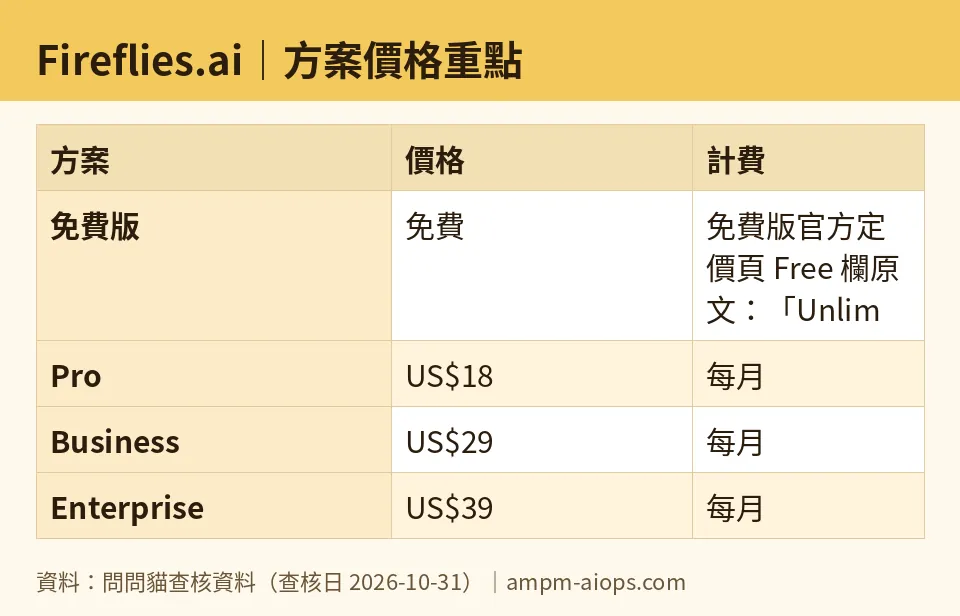
Figure: compiled by AMPM from its verified data (last verified 2026-10-31).
🔍 AMPM exclusive check
What we could verify: the story exists, it was published by Ars Technica, and a second independent source, Nolan Lawson’s blog, also covers it. The headline wording above is quoted from Ars Technica’s link.
What we could not verify: the article body, the facts of the case, and any role for Fireflies.ai. Nothing in our data connects the tool to the events beyond the tag. If you see claims online that it does, check them against the original report before you repeat them.
Verdict: who should use it, who should skip it
This news does not change what Fireflies.ai does or whether it works. It is a prompt to think about how you use any meeting recorder.
Keep using it, with care, if you record routine internal meetings, you tell people up front, your employer allows it, and you check summaries before forwarding them.
Pause and check first if your meetings involve personnel decisions, student or client confidentiality, legal matters, or people who have not been told they are being recorded. Ask your organization what it permits before the next call.
Skip it if you can’t answer “where does this recording go and who can read it?” That question is worth settling before any tool joins a meeting.
We will update this piece if the original reporting names Fireflies or if the vendor responds.
Sources
- Ars Technica, “Dartmouth’s provost warned us about AI cheating—but his own AI use cost him his job”: https://arstechnica.com/tech-policy/2026/10/dartmouths-provost-warned-us-about-ai-cheating-but-his-own-ai-use-cost-him-his-job/
- Nolan Lawson (nolanlawson.com), independent coverage of the same story. We have the domain from our tracker, not a verified article link.
- Fireflies.ai official site: https://fireflies.ai
Written: 2026-11-01 Price last verified: 2026-10-31 Tool last health-checked: 2026-11-01
🔗 Related on AMPM
📎 Sources
All prices and quotas in this article come from AMPM’s verified dataset for Fireflies.ai (last verified 2026-10-31); primary sources:
🐾 Meet the cats: AMO and PIMI

AMPM is a Taiwan-based AI-tool pricing watchdog. Our motto: ask before you subscribe. Two cats argue every tool from two sides:
- ☀️ AMO — the budget-minded cat. Always asks: is the free tier enough, and is paying actually worth it?
- 🌙 PIMI — the performance-minded cat. Cares about whether it works well, fast, and gets your job done.

When they are done arguing, you know whether to pay. Every number is checked by us, with the verification date at the end.
🐾 Our sister sites also checked
Read next
- Fireflies.ai Full breakdown: pricing, features and real-world limits
- Fireflies.ai Is the free quota enough?
- Fireflies.ai Alternatives
- Free plan limits for every AI tool we track
More verified articles on this tool
- [News] Fireflies.ai Auto-Joins Your Meetings — and the New 'Rogue AI Agent' Reports Just Made That a Boardroom Question
- [How-to] Fireflies.ai Free Tier: How Far the AI Credits and Storage Really Go
- Fireflies Free Has a Meeting Limit by Default: The Catch Behind 'Unlimited Transcription'