[News] Mori, the Silent Screenless Robot Built to Win Back Your Attention: Does It Change Anything for Speechify Users?
- Free tier: Yes
- Cheapest paid plan: US$29/mo and up
- Free quota: The free version can be used long-term but has clear limitations: only …
- Last checked: 2026-10-05
Article last updated: 2026-11-01



Let’s be straight about the angle. The news this week is a new desk robot called Mori. It is not a Speechify update. Neither report in our file mentions Speechify. We cover Speechify because the story touches the same question: how do you get through your day without being pulled apart by your phone? This piece covers what was reported, what we can’t tell yet, and whether anyone should change a reading-tool decision because of it. Short answer: no.
What happened
On 31 October 2026, the Taiwanese tech outlet TechNews reported on Mori, an AI companion robot. A second outlet, the LINE news portal, carried the story too, so two independent sources are in play. Chinese-language coverage calls it “Mushroom”. The English slug of the TechNews URL describes it as possibly the cutest AI companion robot yet, one that reacts to you like a pet.
Three points come through in the coverage we have:
- It doesn’t talk. Mori is not a voice assistant. It won’t answer questions or read you the news.
- It has no screen. There is nothing to scroll, tap or swipe on the device itself.
- The pitch is attention. It is marketed at people who pick up their phone and can’t put it down. The idea is that a small, pet-like object reacts to you and helps you drift away from the glowing rectangle.
The reports in our file do not tell us the maker, the price, the release date, how Mori senses you, or whether it connects to an app or an AI service. We won’t guess at any of that. If you see specifics elsewhere, check them against the original reports linked below.
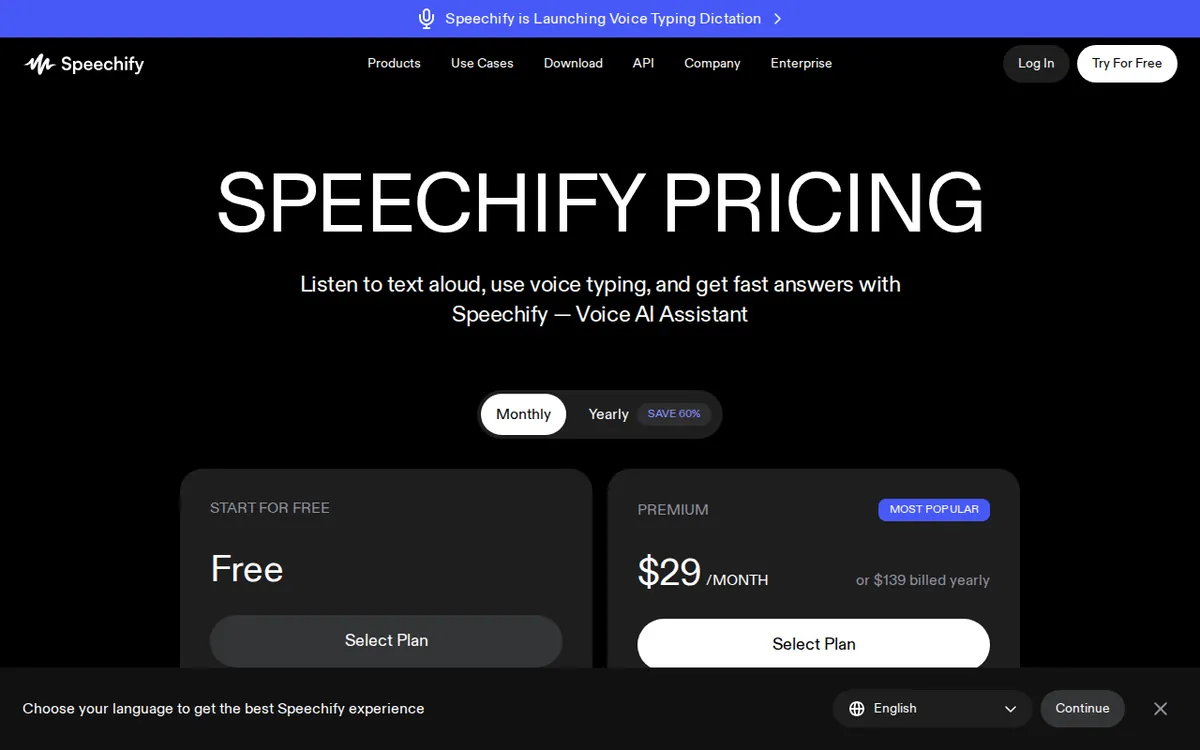
Figure: speechify.com official pricing page, captured 2026-11-01.
How AMPM sees it
Why a silent robot is an interesting design choice
Most AI products compete by doing more: more answers, more voices, more features. Mori goes the other way. It takes away speech and screens on purpose. That is a clear bet that the problem for some people is not a lack of information. The problem is too much stimulation.
That bet is easy to understand. A phone is built to hold your attention. A device that holds some of that attention in a gentler way, the way a pet or a plant on your desk does, is at least a coherent idea. Whether it works is a separate matter. A cute object can sit on a shelf unused after the first week. Gadgets in this “calm tech” corner have a mixed record, and we have not seen Mori tested.
Where Speechify fits, and where it doesn’t
Speechify is text-to-speech software. That means it turns written text into spoken audio. You feed it web pages, PDFs, emails or scanned documents, and it reads them aloud across your phone, computer and browser. Its main pitches are reading efficiency and accessibility.
On the surface, Mori and Speechify have little in common. One is a physical object that says nothing. The other is software that talks all day. But they sit on opposite sides of the same worry:
- Mori tries to pull you away from the screen.
- Speechify tries to let you take in text without staring at it, so a long article can play while you walk, cook or commute.
Inference, not reported fact: a person trying to cut down screen time might reasonably use both ideas. Listening to a document instead of reading it on a lit screen is one way to reduce screen hours. A device that nudges you off your phone is another. Neither replaces the other.
There is also a limit to that argument. Listening is not the same as focusing. Audio can become one more stream competing for your attention. If your goal is a quieter relationship with your devices, a reading tool alone won’t get you there. It solves “I have too much to read,” not “I can’t stop scrolling.”
Questions we’d want answered before trusting Mori
A robot that “reacts to you” has to notice you somehow. The coverage we have doesn’t say how. We are flagging these as open questions, not accusations:
- What does it sense? A camera, a microphone, motion or touch are very different things to put in your bedroom or office.
- Where does the data go? Does anything leave the device? Does it need an account or an app?
- What does “AI” mean here? It could be a few simple reactions, or a service running in the cloud. Those are different products with different risks.
- What happens to an emotional bond? Pet-like gadgets are designed to make you feel something. That can be pleasant. It also raises fair questions about who benefits when you get attached to a product.
None of these are answered in the reports we have. Until they are, treat Mori as an interesting announcement, not a proven product.
Should you change your decision?
If you use Speechify, or are thinking about it, Mori gives you no reason to switch, wait or cancel. Nothing in the reports touches Speechify’s features, plans or availability. Your decision should still rest on what you read and how: how much text you need to get through, whether you want listening on the go, and whether you need accessibility support.
If you are mainly worried about phone habits, here is a practical way to think about it. Ask first whether your problem is reading load or scrolling habit. If it’s reading load, a read-aloud tool is the relevant category. If it’s scrolling habit, a software reader is the wrong lever, and a physical nudge like Mori is at least aimed at the right problem, though unproven.
What to watch next
- A maker and a launch plan. Without these, “debut” may mean a prototype or a showcase.
- Independent hands-on reviews. Marketing says it helps you focus. Only people who live with it for weeks can say whether it does.
- Privacy details. What sensors it has, what it records, and whether it works without a network connection.
- Whether the category grows. If more “quiet” AI devices appear, it would suggest a real shift from talkative assistants to calmer ones. One robot doesn’t make a trend.
We will update this page if Mori’s maker or product details become clear, or if anything connects it to reading and text-to-speech tools.
Sources
- TechNews (technews.tw), 31 October 2026, original report on the Mori AI companion robot: https://technews.tw/2026/10/31/mori-might-be-the-cutest-ai-companion-robot-yet-and-it-reacts-to-you-like-a-pet/
- LINE news portal (line.me), syndicated coverage of the same announcement, as listed in our event record.
Written: 2026-11-01 Price last verified: 2026-10-05 Tool last health-checked: 2026-11-01
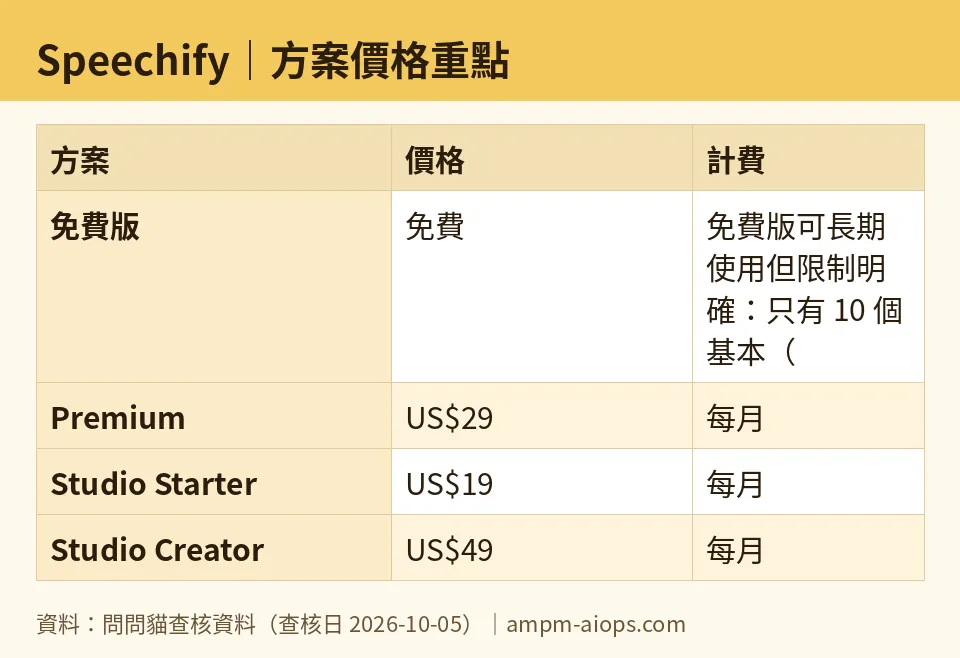
Figure: compiled by AMPM from its verified data (last verified 2026-10-05).
🔗 Related on AMPM
📎 Sources
All prices and quotas in this article come from AMPM’s verified dataset for Speechify (last verified 2026-10-05); primary sources:
🐾 Meet the cats: AMO and PIMI

AMPM is a Taiwan-based AI-tool pricing watchdog. Our motto: ask before you subscribe. Two cats argue every tool from two sides:
- ☀️ AMO — the budget-minded cat. Always asks: is the free tier enough, and is paying actually worth it?
- 🌙 PIMI — the performance-minded cat. Cares about whether it works well, fast, and gets your job done.

When they are done arguing, you know whether to pay. Every number is checked by us, with the verification date at the end.
🐾 Our sister sites also checked
Read next
- Speechify Full breakdown: pricing, features and real-world limits
- Speechify Is the free quota enough?
- Speechify Alternatives
- Free plan limits for every AI tool we track
More verified articles on this tool
- [How-to] Speechify Free Tier Limits: Where It Stops, and Is Premium Worth It?
- [Verified] Speechify's Free Tier Has Three Hard Limits: Can You Live With Them?
- What Speechify's Free Tier Actually Gives You, and Where It Feels Limited